Magic: The Gathering (MTG) offers a plethora of deck-building options, but few are as thematically exciting and mechanically intriguing as the Werewolf Commander deck. This comprehensive guide will walk you through constructing and piloting a formidable Werewolf-themed deck in the popular Commander format.
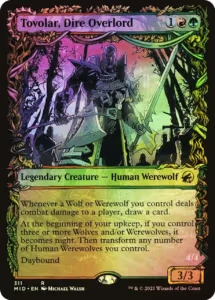
- Tovolar, Dire Overlord is the premier Werewolf commander, offering card advantage and transformation triggers other commanders cannot match.
- Daybound and nightbound mechanics hinge on how many spells are cast each turn, so controlling spell timing is central to the strategy.
- Aim for 30 to 35 creature slots focused on werewolves and wolves, supplemented by 25 to 30 support spells for transformations.
- Moonmist is the most efficient single card for forcing nightbound transformation, converting all humans to werewolves at instant speed.
- The Celestus provides direct day/night cycle control and also provides mana, making it a dual-purpose artifact worth including in every Werewolf deck.
#Introduction to MTG Werewolf Commander Decks
Werewolf decks in MTG capitalize on unique transformation mechanics, primarily utilizing daybound and nightbound abilities. These decks offer a dynamic playstyle, with creatures changing form based on spells cast each turn, mimicking werewolves’ cyclical nature in folklore.
The appeal of Werewolf Commander decks lies in their adaptability to changing game states. As day turns to night and back, your creatures grow stronger or revert to human forms, creating an ever-shifting board state that keeps opponents guessing.
Innistrad sets, particularly Innistrad: Midnight Hunt, provide a rich pool of werewolf cards and support mechanics. These sets have significantly expanded the werewolf tribe, offering powerful options for a cohesive and synergistic deck.
#Top Werewolf Commanders
Your choice of commander is crucial. Here are some top options:
- Tovolar, Dire Overlord: Considered the premier Werewolf commander, Tovolar offers unparalleled card advantage and werewolf transformation support.
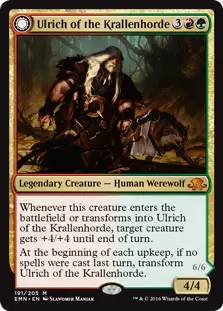
- Ulrich of the Krallenhorde: The first legendary Werewolf brings versatility to the command zone, buffing creatures and transforming between forms.
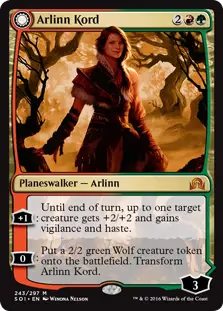
- Arlinn Kord: This planeswalker commander transforms into a werewolf, providing various buffs and creature generation abilities.
Some players also consider commanders like Samut, Voice of Dissent for combat advantages that synergize with an aggressive werewolf strategy.
#Key Cards for Werewolf Commander Decks
A successful Werewolf Commander deck relies on powerful werewolf creatures and strategic support cards. Essential inclusions are:
#Werewolf Creatures:
- Huntmaster of the Fells
- Mayor of Avabruck
- Tovolar’s Huntmaster
- Kessig Naturalist
- Avabruck Caretaker
#Support Spells and Enchantments:
- Moonmist
- Immerwolf
- Howlpack Resurgence
- Unnatural Moonrise
- Full Moon’s Rise
#Utility Artifacts:
- The Celestus (for day/night cycle control)
- Vanquisher’s Banner (tribal support)
- Herald’s Horn (cost reduction and card draw)
For more insights on powerful equipment cards in MTG, check out our guide on the best equipment in MTG.
#Building a Werewolf Commander Deck
Constructing a well-balanced Werewolf Commander deck requires careful consideration. Here are key principles:
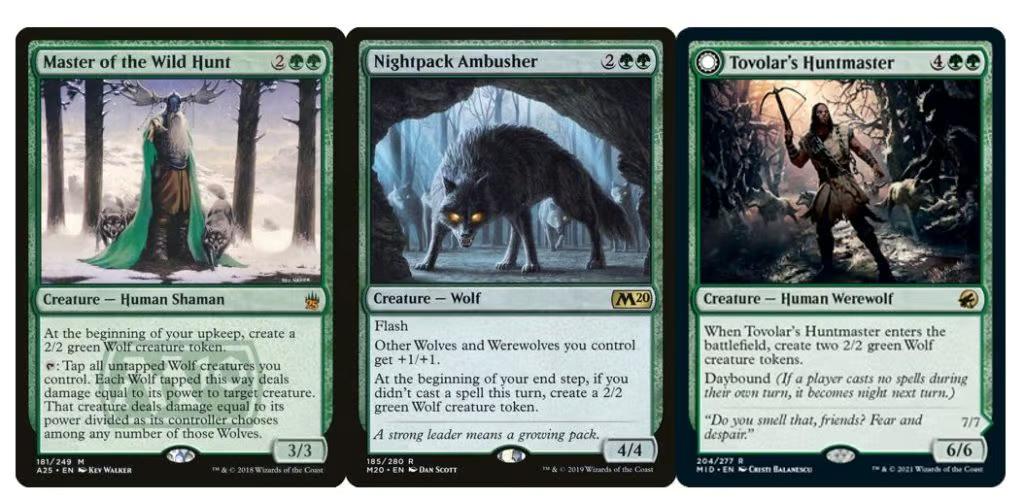
- Creature Base: Aim for 30-35 creatures, focusing on werewolves and wolves.
- Support Spells: Dedicate 25-30 slots to instants, sorceries, and enchantments that facilitate werewolf transformations or provide tribal support.
- Mana Base: Focus on a strong Gruul (red-green) mana base. Include utility lands like Kessig Wolf Run for additional werewolf synergy.
- Ramp and Card Draw: Include green ramp spells and rely on your commander and tribal effects for card draw.
- Removal and Protection: Include versatile removal spells and protection for key werewolves.
For inspiration on building control-oriented decks, which can complement a Werewolf strategy, see our article on MTG control decks.
#Strategies for Playing a Werewolf Deck
Effective piloting of a Werewolf Commander deck requires understanding the day/night mechanic. Key strategies include:
- Managing the Day/Night Cycle: Pay attention to spells cast each turn to trigger nightbound and transform your werewolves.
- Aggressive Play: Apply early pressure with human-form werewolves, then transform for powerful attacks.
- Timing Your Spells: Use instant-speed spells during opponents’ turns to maintain nightbound.
- Utilizing Flash: Cards with flash help play around the day/night cycle without triggering daybound.
For deck-building inspiration in other formats, check out our guide on Gwent deck builds.
#Sample Werewolf Commander Deck List
Here’s a sample decklist to get you started:
Commander:
- 1 Tovolar, Dire Overlord
Creatures (33):
- 1 Tovolar’s Huntmaster
- 1 Avabruck Caretaker
- 1 Kessig Naturalist
- 1 Mayor of Avabruck
- 1 Huntmaster of the Fells
- 1 Immerwolf
- (27 other werewolves and wolves)
Spells (27):
- 1 Moonmist
- 1 Unnatural Moonrise
- 1 Howlpack Resurgence
- 1 Full Moon’s Rise
- 1 Cultivate
- 1 Kodama’s Reach
- 1 Beast Within
- 1 Chaos Warp
- (19 other support spells)
Artifacts (5):
- 1 The Celestus
- 1 Vanquisher’s Banner
- 1 Herald’s Horn
- 1 Lightning Greaves
- 1 Swiftfoot Boots
Lands (35):
- 1 Kessig Wolf Run
- 1 Command Tower
- 1 Cragcrown Pathway
- (32 other lands, mostly Mountains and Forests)
#Tips for Optimizing Your Werewolf Deck
- Fine-tune Your Creature Count: Playtest to find the right balance.
- Incorporate Flexible Removal: Include cards that serve as both removal and werewolf enablers.
- Consider Sideboard Options: Have a small sideboard to adjust your strategy.
- Upgrade Your Mana Base: Consider adding fetch lands and shock lands for consistency.
- Stay Updated: Keep an eye out for new werewolf cards in future sets.
For insights on recent MTG releases that might benefit your Werewolf deck, check our analysis of the MTG Core Set 2021.
#Conclusion
Building and playing an MTG Werewolf Commander deck offers a unique and engaging experience. By carefully selecting your commander, incorporating key werewolf cards, and mastering the strategies outlined in this guide, you’ll be well-equipped to lead your pack to victory.
As Wizards of the Coast continues to support tribal themes, we can expect more exciting werewolf cards in the future. Keep refining your deck, and may your howls always herald your opponents’ doom.
For those interested in other tribal strategies, our guide on the best Goblin cards in MTG offers insights that can be applied to Werewolf tribal building as well.
#FAQs about MTG Werewolf Commander Decks
- Q: Are Werewolf decks competitive in Commander? A: While not top-tier, well-constructed Werewolf decks can be very competitive in casual to semi-competitive metas.
- Q: Can I include non-Werewolf creatures? A: Yes, including other creatures (especially Wolves) that synergize well can strengthen your deck.
- Q: How does the day/night mechanic work in multiplayer? A: The day/night state is shared among all players, changing based on the number of spells cast by the previous player.
- Q: What are some budget options for a Werewolf Commander deck? A: Many common and uncommon Werewolves from recent Innistrad sets are budget-friendly and effective.
- Q: How do I protect my Werewolves from board wipes? A: Cards like Heroic Intervention, Wrap in Vigor, and Unbreakable Formation can help protect your board.