The Best Banana Plugs for High-Quality Audio Connections
Compare the best banana plugs for speaker wire connections. Top picks include Sewell Deadbolt, FosPower, and Monoprice for secure, gold-plated audio.
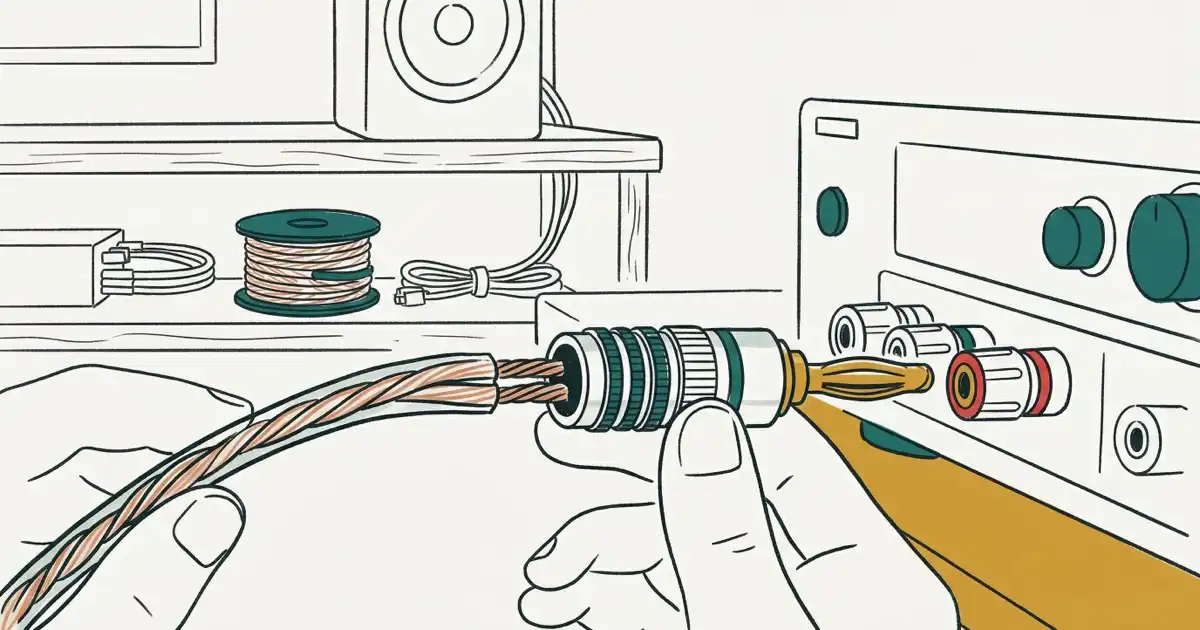
Quick AnswerSewell Deadbolt banana plugs are the best choice for most audio setups, thanks to their tool-free self-crimping design, 24K gold plating, and rock-solid quick-lock connection.
Banana plugs sit at the end of your speaker wire and snap into your amp or receiver’s binding posts. This guide compares eight popular sets on the factors that actually matter for a home theater: connection strength, corrosion resistance, gauge compatibility, and value.
- Sewell Deadbolt banana plugs use a self-crimping quick-lock design that installs in seconds without any tools
- 24K gold plating resists corrosion far better than nickel plating, which matters for connections left undisturbed for years
- Always match plug gauge compatibility to your wire, as most plugs support 12 to 18 AWG but some handle heavier 10 AWG runs
- Color-coded plugs, typically red and black, prevent polarity mistakes that cause phase cancellation and muddy bass
- For most home audio setups, a $15 to $30 set of quality banana plugs outlasts bare wire connections by several years
#Do Banana Plugs Actually Improve Sound Quality?
The honest answer: barely, if at all, on a fresh installation. A properly stripped bare wire connection has essentially the same resistance as a gold-plated banana plug on day one. The real benefit is long-term reliability.
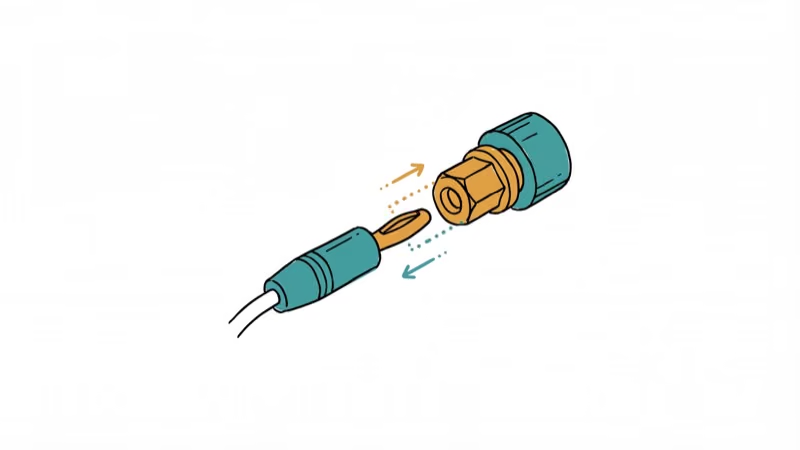
According to What Hi-Fi’s speaker cable guide, the primary advantage of banana plugs is preventing oxidation at the connection point. Bare copper slowly oxidizes and its contact resistance creeps up over months, while a gold-plated plug holds a stable, low-resistance connection. That consistency matters when connections sit undisturbed for years behind a media cabinet.
Three things separate good plugs from bad ones:
- Plating material: 24K gold resists corrosion for years. Nickel oxidizes within a year in humid environments.
- Lock mechanism: Self-crimping or dual-screw designs grip wire tightly. Spring-loaded types loosen over time.
- Gauge compatibility: Most plugs fit 12-18 AWG. If you run 10 AWG for speaker runs over 50 feet, check specs before buying.
#Top 8 Banana Plugs Compared
#1. Sewell Deadbolt Banana Plugs
Self-crimping teeth and a quick-lock mechanism. No tools needed, so a full set of 10 plugs goes on in well under 15 minutes. The 24K gold plating resists discoloration even in humid rooms.
As an Amazon Associate, fone.tips earns from qualifying purchases. Some links on this page are affiliate links.
#2. FosPower Banana Plugs
Dual-set screws give a firmer mechanical grip than self-crimping designs, which makes the FosPower plugs harder to dislodge than the Sewell Deadbolts. They’re the better pick for installations where cables get bumped or moved regularly.
#3. Monoprice Banana Plugs
The budget pick at roughly $8 for a 5-pair pack. Gold-plated, compatible with 12-18 AWG wire. Electrically they perform the same as plugs costing twice as much, and the 4mm pins fit standard binding posts snugly without being hard to insert or remove.
#4. Amazon Basics Banana Plugs
Self-crimping teeth plus 24K gold plating. Compatible with 12-18 AWG wire. Color-coded red and black rings make polarity identification quick during setup.
#5. KabelDirekt Banana Plugs
The key differentiator here is 10 to 16 AWG wire support. These dual-screw, 24K gold-plated plugs are the only option on this list for thicker cable runs over 50 feet, where speaker-wire gauge starts to matter.
#6. Mediabridge Banana Plugs
Crimping teeth design with gold plating. The widest gauge range at 8-18 AWG. If you’re running heavy-gauge wire for a whole-house audio system, these won’t force you to buy separate plugs for your thicker runs.
#7. Goaycer Banana Plugs
Brass construction with 24K gold plating and dual screws. Compatible with 12-18 AWG. The machining quality sits slightly below FosPower’s level, but they hold connections firmly and cost about 30% less.
#8. WGGE Banana Plugs
Gold-plated, 12-18 AWG compatible. At roughly $6 for a 6-pair pack, these are the cheapest option that still uses gold plating. If you’re pairing them with budget Bluetooth headphones under $100 and a separate wired speaker setup, WGGE plugs handle the wired side without breaking the bank.
#Installation Guide for Banana Plugs
Installation takes 2-3 minutes per plug. Here’s the process:
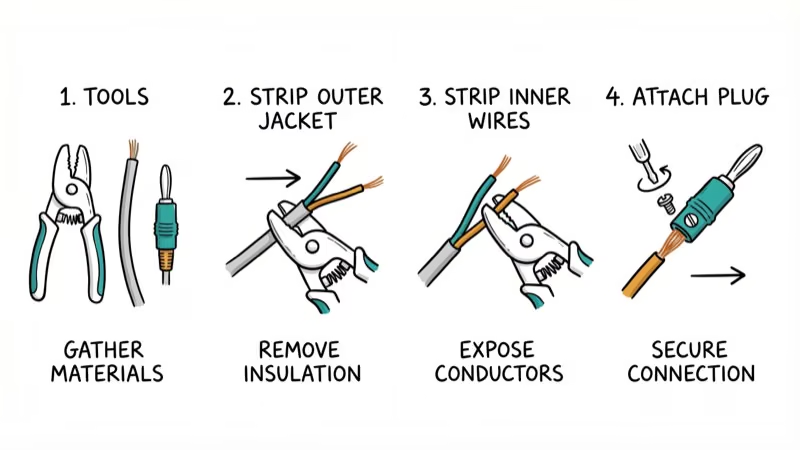
- Strip about 3/8 inch (10mm) of insulation from your speaker wire
- Twist the exposed strands tightly
- Loosen the screw or engage the crimping mechanism
- Insert the stripped wire fully into the barrel
- Tighten screws or let the self-crimping teeth grip
- Tug firmly to confirm it holds
Use color-coded plugs (red for positive, black for negative) to maintain correct polarity. Reversed polarity between speakers causes phase cancellation that audibly thins out bass response and vocal clarity. If you’re also setting up wireless options, our guide on connecting multiple Bluetooth speakers covers multi-room audio without any wires at all.
#Should You Use Banana Plugs or Bare Wire?
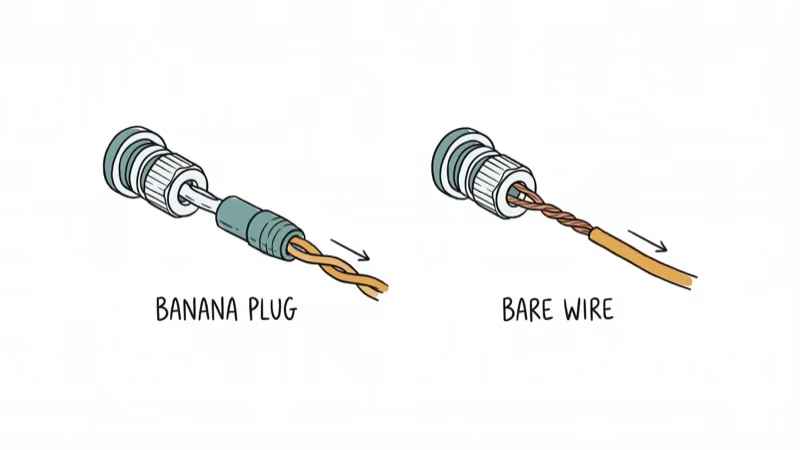
| Factor | Banana Plugs | Bare Wire |
|---|---|---|
| Initial cost | $6-$30 per set | Free |
| Corrosion | Gold resists for years | Oxidizes in months |
| Convenience | Plug-and-play reconnection | Re-strip each time |
| Signal loss | Negligible | Negligible (fresh) |
| Best for | Permanent setups | Tight budgets |
Your speaker quality and multimedia audio controller matter far more than the connector type. Plugs are the last 2 inches of a signal chain that starts at your source.
If you’re troubleshooting sound issues, check your audio drivers and codec support first since those affect output before the signal ever reaches the binding posts on your receiver.
For most home audio enthusiasts, the benefits of banana plugs outweigh the minor cost. Over a 2-3 year period, the oxidation prevention alone justifies the $15-$30 investment, especially in setups that you connect once and leave for years.
#Budget Picks vs. Premium Options
At the budget end, Monoprice ($8/5 pairs) and WGGE ($6/6 pairs) deliver the same gold plating and signal quality as premium options. The difference shows in build quality and longevity: the dual-screw FosPower and Sewell plugs hold their grip over years, while cheaper budget plugs are more prone to working loose over time.
For a 2-channel stereo setup (4 plugs total), spend the extra $10 on Sewell or FosPower. For a 5.1 or 7.1 surround system needing 12-16 plugs, mixing Monoprice for surround channels and Sewell for your front pair keeps total cost under $25.
#Gauge Compatibility Quick Reference
| Wire Gauge | Recommended Plugs | Typical Use |
|---|---|---|
| 10 AWG | KabelDirekt, Mediabridge | Long runs over 50 ft |
| 12 AWG | Any plug on this list | Standard home theater |
| 14 AWG | Any plug on this list | Short to medium runs |
| 16-18 AWG | Any plug on this list | Budget setups, short runs |
If you’re not sure what gauge you have, check the printing on the wire jacket. Most home theater speaker wire is 14 or 16 AWG. For a Bluetooth speaker under $50 you won’t need plugs at all since the connection is wireless.
#Bottom Line
Grab the Sewell Deadbolt plugs if you want the easiest install and proven long-term reliability. The FosPower set is better when your cables get bumped regularly thanks to its stronger dual-screw grip. On a tight budget, Monoprice at $8 for 5 pairs delivers the same signal quality as plugs costing three times more. Match your plug’s gauge range to your wire thickness, and pick gold plating over nickel every time.
#Frequently Asked Questions
Do banana plugs improve sound quality?
On a fresh connection, the difference is nearly immeasurable. The real advantage shows over time: gold-plated plugs resist the oxidation that degrades bare wire connections over months, so a plugged connection holds steady while bare copper slowly climbs in resistance.
Are all banana plugs the same size?
Most are standardized at 4mm diameter, which fits standard 5-way binding posts on receivers and speakers. A few high-end European speakers use 2mm posts, but that’s uncommon. Check your equipment’s terminal type before ordering.
Can I use banana plugs with any speaker?
Banana plugs work with speakers and amplifiers that have binding posts with a 4mm hole. Spring-clip terminals on budget speakers don’t accept banana plugs. Look at the back of your speakers to confirm you have binding posts before buying.
How often should I replace banana plugs?
Rarely. Gold-plated plugs last 5-10 years in normal conditions. Replace them only if you notice physical damage, loose connections, or visible corrosion on the contact surface.
What gauge wire works best with banana plugs?
Most plugs support 12-18 AWG, which covers typical home speaker runs under 50 feet. For runs over 50 feet, use 10 AWG wire with KabelDirekt or Mediabridge plugs that support heavier gauges.
Why are my banana plugs loose in the binding post?
The spring mechanism inside may have compressed over time. Try gently spreading the contact leaves with a small flathead screwdriver. If the plug still wobbles, replace it. FosPower and KabelDirekt dual-screw plugs maintain tighter connections longer than spring-loaded designs.
What wire gauge do I need for long speaker cable runs?
For runs under 25 feet, 16 AWG works fine. Between 25-50 feet, step up to 14 AWG. Over 50 feet, use 12 or 10 AWG. Thicker wire reduces resistance over distance, and the difference becomes audible on runs past 30 feet.

Best Laptop for Running LLMs in 2026: Memory Comes First
The best laptop for running LLMs is a memory purchase first. Compare MacBook unified memory against NVIDIA laptop VRAM, and see what each tier really runs.
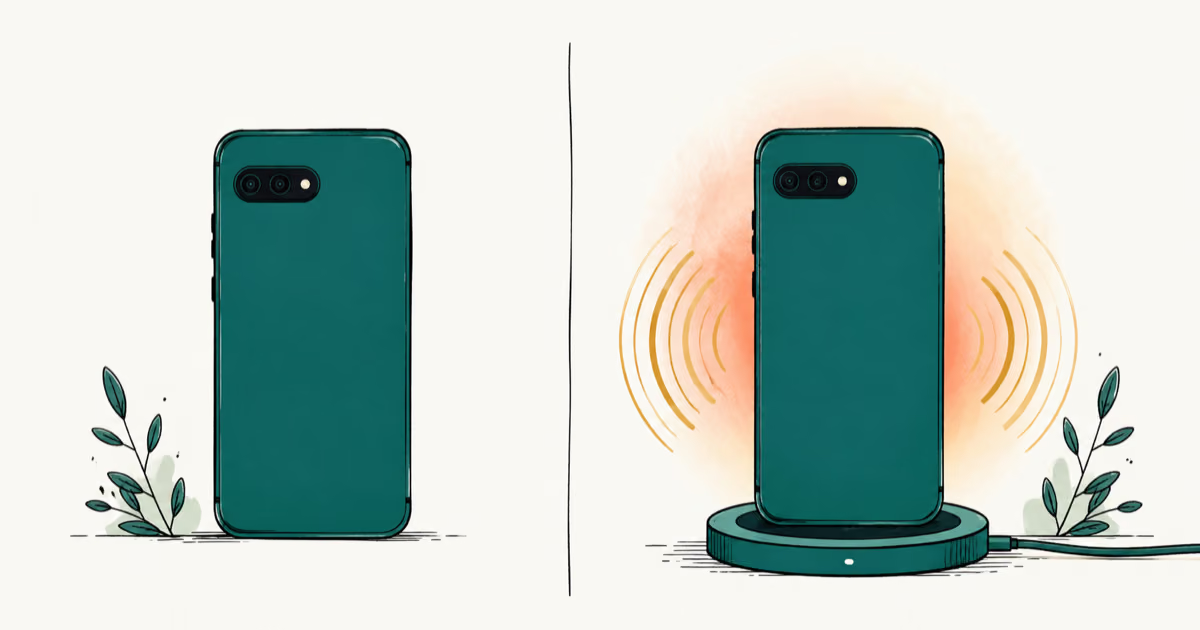
Pixel 11 vs Pixel 10: What Changed and Who Should Upgrade
Pixel 11 vs Pixel 10: same screen and camera resolution, new Tensor G6, 25W wireless, and Gemini Intelligence. Here is who should actually upgrade.
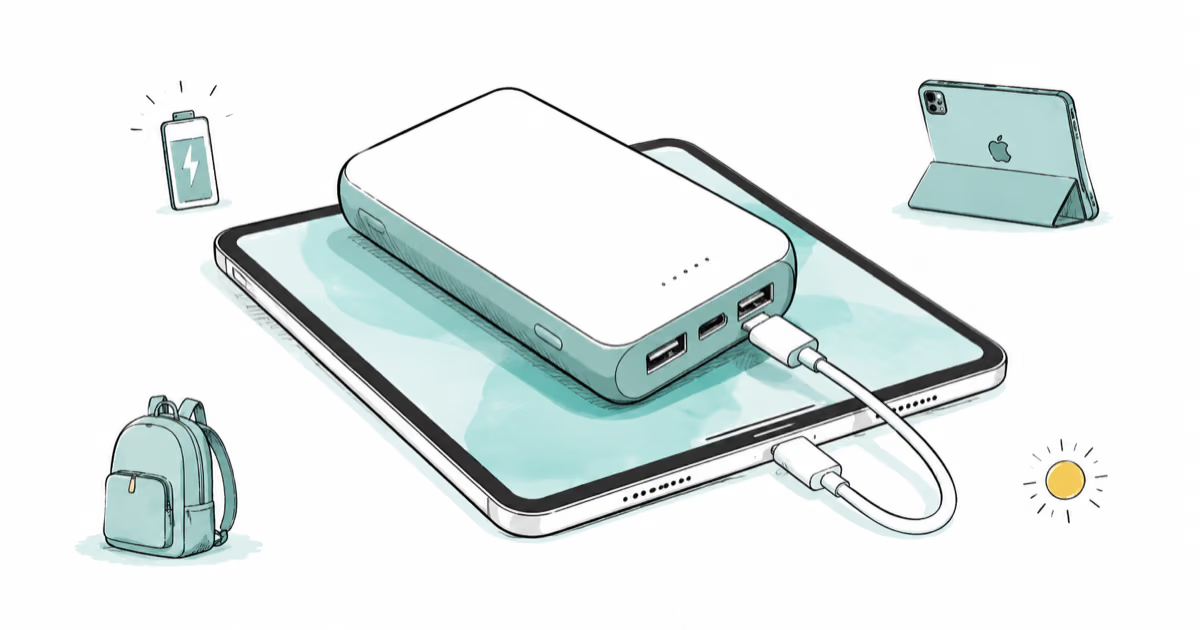
Best Power Bank for iPad in 2026: Pro, Air, and Mini
Best power bank for iPad in 2026. Compare mAh tiers and USB-C PD wattage for iPad Pro, Air, and mini, plus airline Wh math, cables, and travel tips.
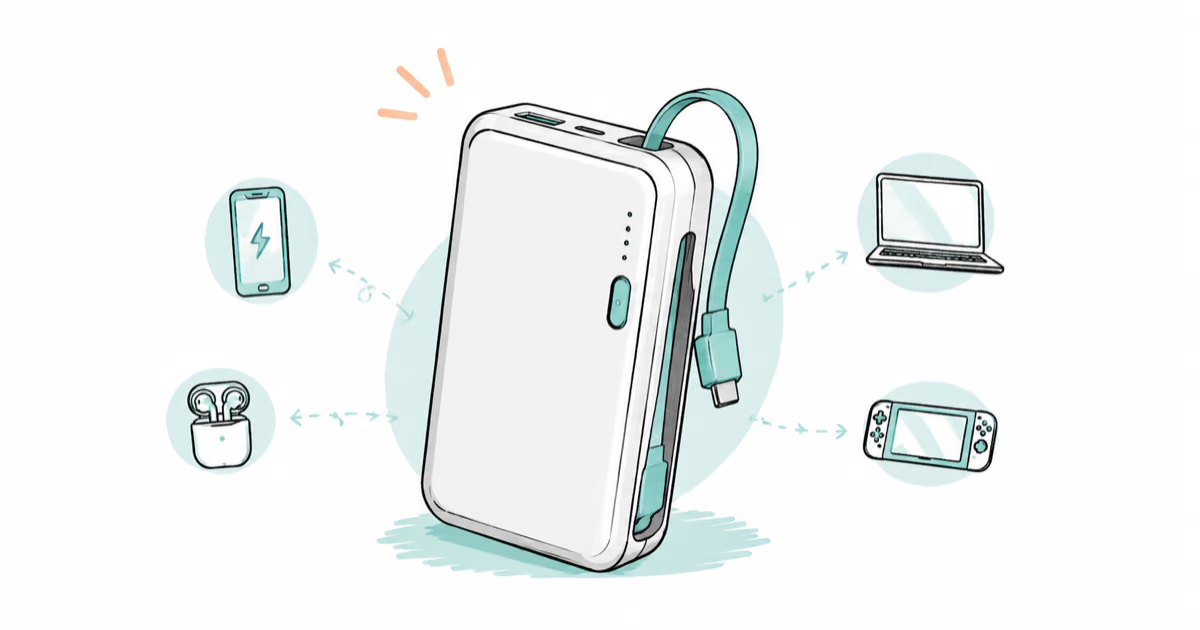
Best Power Bank With Built-In Cable: Top 2026 Picks
Best power bank with built-in cable picks for 2026. Compare single USB-C, multi-connector, and retractable laptop banks, plus airline Wh math.