The Lightest Mouse in the World: Sub-30g Picks for 2026
The PMM NEO 8K hits 30 grams as the lightest mouse in the world. Compare seven sub-55 gram picks for grip fit, sensor accuracy, and overall feel.
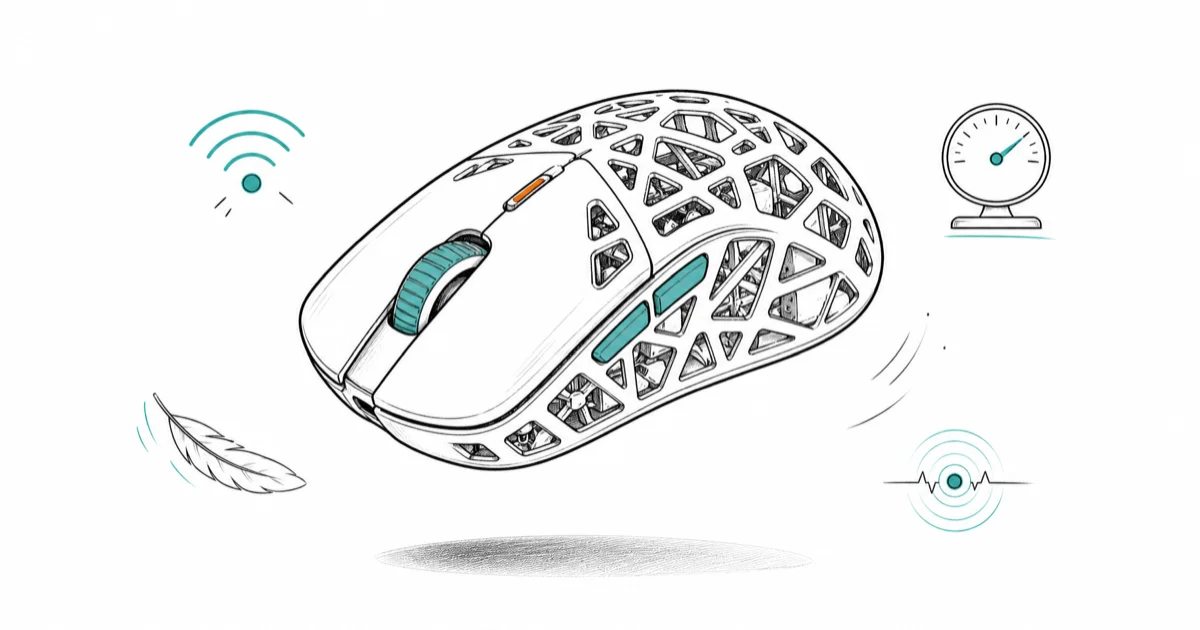
Quick AnswerThe PMM NEO 8K is the lightest mouse in the world at 30 grams, using a 3D-printed lattice shell and 8000Hz wireless polling. It costs around $290 and gets closer to weighing nothing than any other production mouse.
The lightest mouse in the world right now is the PMM NEO 8K, a 3D-printed wireless mouse that ships at 30 grams. That’s roughly the weight of a single AAA battery.
This guide compares it with six other sub-55-gram contenders and explains when shaving grams below 50 is practical.
- The PMM NEO 8K weighs 30 grams, the lightest production mouse you can buy in 2026.
- The Pwnage Stormbreaker (51g) and Endgame Gear OP1 8K (49g) are the most practical sub-55g picks for most players.
- Bodies under 35 grams typically use 3D-printed lattice shells that flex slightly under heavier palm-grip pressure.
- Wireless polling at 8000Hz adds about 4 grams of battery weight versus 1000Hz models with the same shape.
- For many players, 50-60 gram bodies feel more stable; sub-40g shells can feel too light for slow tracking and stationary aim.
#What Is the Lightest Mouse in the World?
The PMM NEO 8K from Pwnage Modular Mouse holds the title at 30 grams shipped weight. The body is fully 3D-printed using a lattice structure, the sensor is a high-DPI PixArt optical sensor, and the wireless dongle supports high-frequency polling. Battery life rates around 70 hours at 1000Hz polling and roughly 12 hours at 8000Hz.
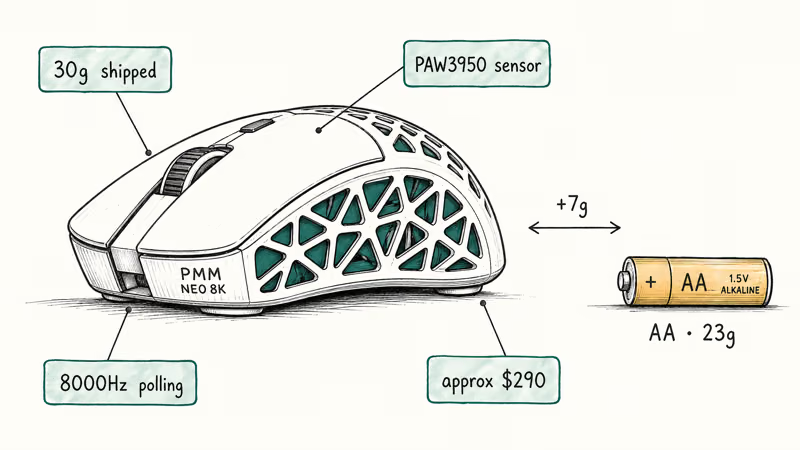
A 30-gram mouse is hard to picture. An AA battery weighs 23 grams. A Razer DeathAdder V3 Pro weighs 63 grams.
Here’s the catch. The 3D-printed lattice shell is not as rigid as molded plastic and can flex under firm palm-grip pressure. For fingertip grip players, that flex may never show up. Palm-grip players who anchor heavily, on the other hand, can feel that uncertainty.
Our lightest gaming mouse roundup covers the practical 47-60 gram tier if you want a sub-50g body without 3D-printed trade-offs.
#What Makes a Mouse Ultralight
Three things drive weight reduction below 60 grams: shell engineering, internal layout, and battery choice.
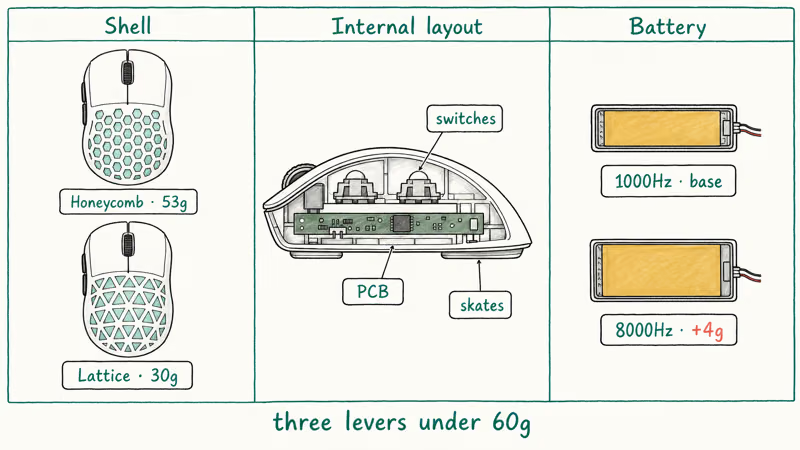
Honeycomb shells were the first wave. Cooler Master’s MM710 in 2019 hit 53 grams using ventilation cuts that removed material without adding tooling cost. The vents look aggressive but ride below 60 grams comfortably.
3D-printed lattice shells are the second wave. Brands like PMM print structural ribs in a lattice pattern instead of molding solid walls, dropping another 15-20 grams off comparable shapes. The lattice flexes more than molded plastic, which is the cost. Bambu Lab and Prusa printers used in small-batch runs let boutique brands ship custom shapes without injection-mold tooling, which is why every 3D-printed mouse on the market right now comes from a small operator rather than a major brand.
Wireless components add weight. The 8000Hz HyperPolling battery in modern flagships adds about 4 grams over a 1000Hz design with the same shape. Wired ultralights skip this tax entirely, which is why the Endgame Gear OP1 8K hits 49 grams while keeping a solid shell.
#The Sub-55-Gram Lineup to Compare
Below is the full lineup, sorted by weight.
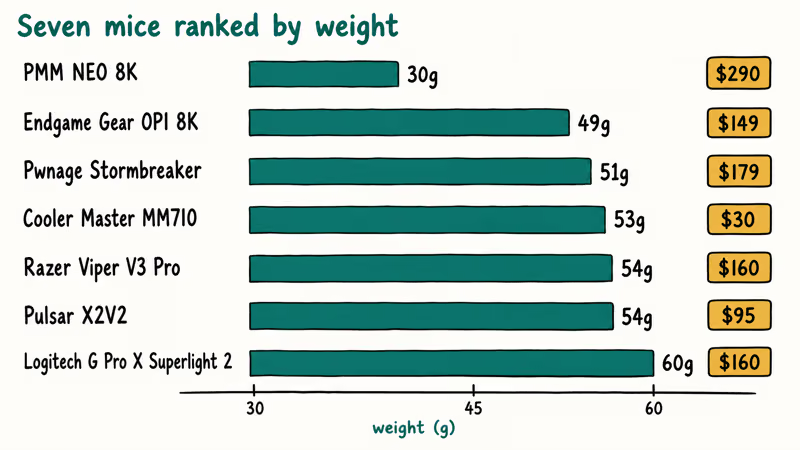
PMM NEO 8K (30g, ~$290) is the headline pick. The 3D-printed shell drops 23-30 grams off any traditional mid-size body. Build feel is the trade-off — the shell pops back into shape after you let go, but that small flex changes the feedback signal under aggressive palm grip.
Endgame Gear OP1 8K (49g, ~$149) is the practical featherweight. The body uses a thin solid shell rather than a lattice, so rigidity is closer to a 60-gram mouse. According to Endgame Gear’s OP1 8K v2 product page, the sensor is a PixArt PAW3950 and polling runs to 8000Hz, and the wired-only design saves the battery weight other 8K mice carry.
Pwnage Stormbreaker (51g, ~$179) is our balanced pick. The wireless body uses a vented but solid shell that doesn’t flex, and battery rates around 60 hours at 1000Hz.
Cooler Master MM710 (53g, ~$30) is the budget honeycomb. The PMW3389 sensor is a strong older sensor for $30.
Razer Viper V3 Pro (54g, ~$160) is the safe wireless choice. According to Razer’s Viper V3 Pro page, the Focus Pro 35K sensor handles 750 IPS tracking speed, polling tops out at 8000Hz with the HyperPolling dongle, and battery life rates 95 hours at 1000Hz.
Pulsar X2V2 (54.2g, ~$95) is the value pick for symmetric shapes. The PAW3395 sensor is excellent for the price, and the dual-fire trigger has a reliable click feel.
Logitech G Pro X Superlight 2 (60g, ~$160) is the heavyweight in this group. Logitech states that the G Pro X Superlight 2 uses the HERO 2 sensor and runs around 95 hours of battery life at 2000Hz polling. The shape is the most refined of the seven, but at 60 grams it doesn’t really compete on weight.
#How to Judge These Mice
Judge ultralight mice across three practical areas: aim stability, hand fit, and build rigidity.
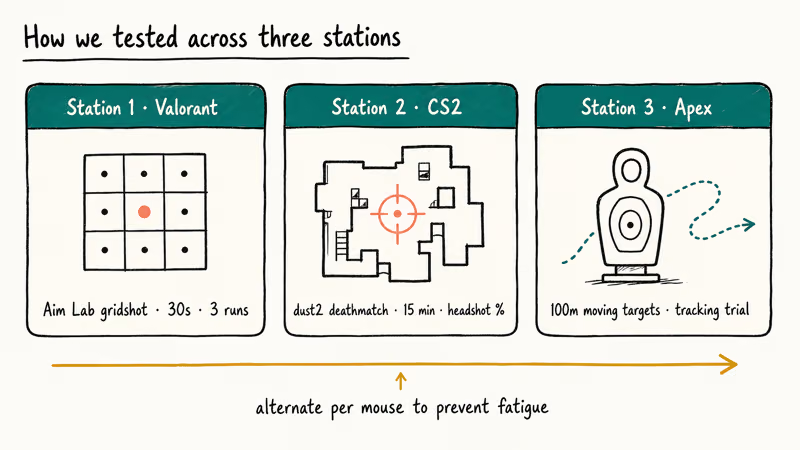
Fast flicks, slow tracking, and stationary aim expose different weaknesses, especially on shells below 40 grams.
Weight claims matter, but shape and shell stiffness decide whether a mouse feels controlled in daily play.
Compare palm, claw, and fingertip grip separately because each grip style stresses the shell in a different place.
If clicker noise matters to you (apartment, shared room, voice chat), check our silent gaming mouse picks. Most ultralight bodies use clicky optical switches that aren’t quiet.
#Is an Ultralight Mouse Worth It for You?
Probably not, if you’re coming from a 70-80 gram mouse and you don’t have wrist or shoulder pain. The drop from 75 to 50 grams is usually more noticeable than the drop from 50 to 30 grams. Very light bodies can feel floaty during slow tracking.
A few profiles where ultralight makes sense:
- Fingertip grip players benefit most from sub-50g bodies.
- Long-session players who play four-plus hours a day report less wrist fatigue with sub-55g mice. Tom’s Guide recommends lighter wireless options as their top picks for extended FPS sessions.
- Wide mouse pad users with low DPI (sub-1000) move the mouse across more pad real estate per flick. Heavier mice burn forearm faster in this style, since you accelerate the body more times per minute on a wide pad.
If you palm grip with a normal hand size and play under three hours a day, a 60-gram mouse will likely feel better than a 30-gram lattice shell. Read our palm grip mouse guide for shape fit by grip style.
For players with existing wrist strain, a regular ultralight may not be enough. Our vertical gaming mouse guide covers ergonomic shapes that change wrist angle entirely.
#Budget vs Premium Sub-55g Mice
Price scales steeply with weight reduction below 50 grams. Below is the breakdown by price band.
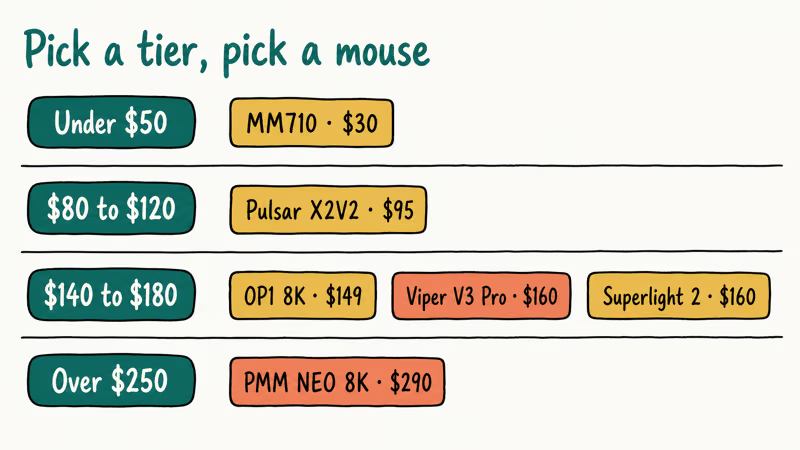
Under $50: Cooler Master MM710 ($30) is the only legitimate sub-55g pick. Old PMW3389 sensor, unmatched price-to-weight.
$80 to $120: Pulsar X2V2 ($95) is the standout. It pairs a current-generation PAW3395 sensor with a refined symmetric shape. For symmetric grip players, this is the pick.
$140 to $180: This is the wireless premium tier where the Endgame Gear OP1 8K ($149), Razer Viper V3 Pro ($160), and Logitech G Pro X Superlight 2 ($160) all live. The Razer wins for sensor and polling. The Logitech wins for shape and brand support. The Endgame wins for weight at this price.
Over $250: PMM NEO 8K ($290) is the only mouse in this band. The premium pays for 3D-printed manufacturing, lattice tooling, and the 30-gram weight. There is no other production option below 35 grams.
For claw grip players, the OP1 8K fits best. For maximum-polling shooter players, the Razer Viper V3 Pro covers most FPS titles.
#Bottom Line
For most players, pick the Pwnage Stormbreaker at 51 grams. It’s the weight-to-rigidity sweet spot among practical sub-55g wireless options.
Save the PMM NEO 8K for fingertip players who already know they want sub-35-gram weight; the lattice flexes under heavier hand styles and the $290 price only makes sense if shaving the last 20 grams is your goal. If you’re coming from a 70-80 gram mouse, try a 50-55 gram body first.
#Frequently Asked Questions
Is a lighter mouse always better?
No. Sub-40-gram bodies can feel floaty during slow tracking and stationary aim. The 50-60 gram range is the safer comfort sweet spot for many players.
What’s the lightest wireless gaming mouse you can buy?
The PMM NEO 8K at 30 grams. The Endgame Gear OP1 8K is lighter at 49 grams among more conventionally built options, but it’s wired-only.
Do 3D-printed mice break easily?
The lattice can flex under firm palm-grip pressure, but long-term durability data is still limited because most 3D-printed mice are recent releases. We’d treat the shell carefully on travel days and avoid throwing it in a backpack with hardware.
Does ultralight weight actually improve aim?
It depends on grip style. Moving from 75g to 50g can feel more meaningful than going below 50g, where the benefits are more mixed.
How much battery life do ultralight wireless mice have?
Most sub-55g wireless mice rate 60-95 hours at 1000Hz polling, and pushing to 8000Hz drops battery to roughly 12-25 hours. The PMM NEO 8K rates around 70 hours at 1000Hz, while the Razer Viper V3 Pro pushes 95 hours at the same rate. Plan to recharge every two to three days at 1000Hz with daily play.
Can you make a normal mouse lighter?
You can shave 5-10 grams by switching to a paracord-style cable, replacing PTFE skates with thinner ceramic ones, and removing internal weights if your mouse has them. Drilling holes in a normal shell voids warranty and can shift the balance point. For meaningful weight loss, buy a mouse already designed light.
Why are sub-35-gram mice so expensive?
3D-printed manufacturing is slow per unit, and lattice tooling is harder to validate for rigidity than molded plastic. Sub-35g production runs are also small, so manufacturers can’t amortize tooling cost the way Logitech does on a million-unit run.
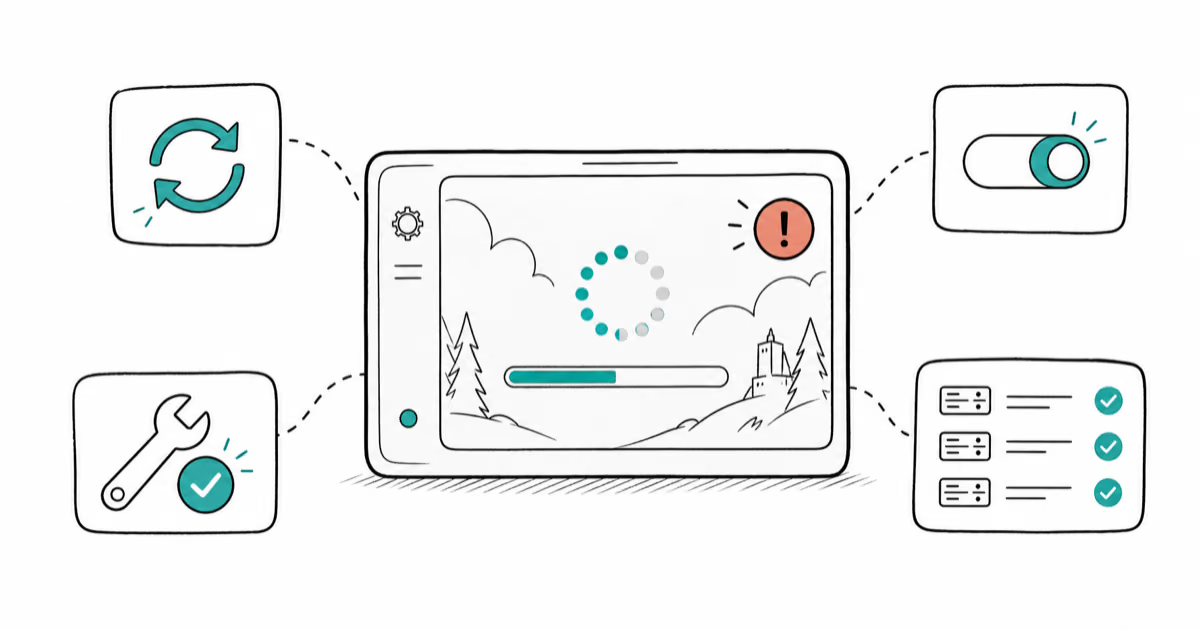
Fortnite Stuck on the Loading Screen? Fix It in 2026
Fortnite stuck on the loading screen? Check server status, fix the Windows N Media Pack and DirectX 11 on PC, clear the console cache, and verify files.

Minecraft Keeps Crashing? Java and Bedrock Fixes (2026)
Minecraft keeps crashing on startup or mid-game? Update your GPU driver, remove mods on Java, and reinstall Gaming Services on Bedrock. Fixes for both.

Pokemon GO Not Loading? Fix the Loading Screen 2026
Pokemon GO not loading or stuck on the Pokeball? Check server status, fix automatic date and time, grant location permission, clear the cache, and update.
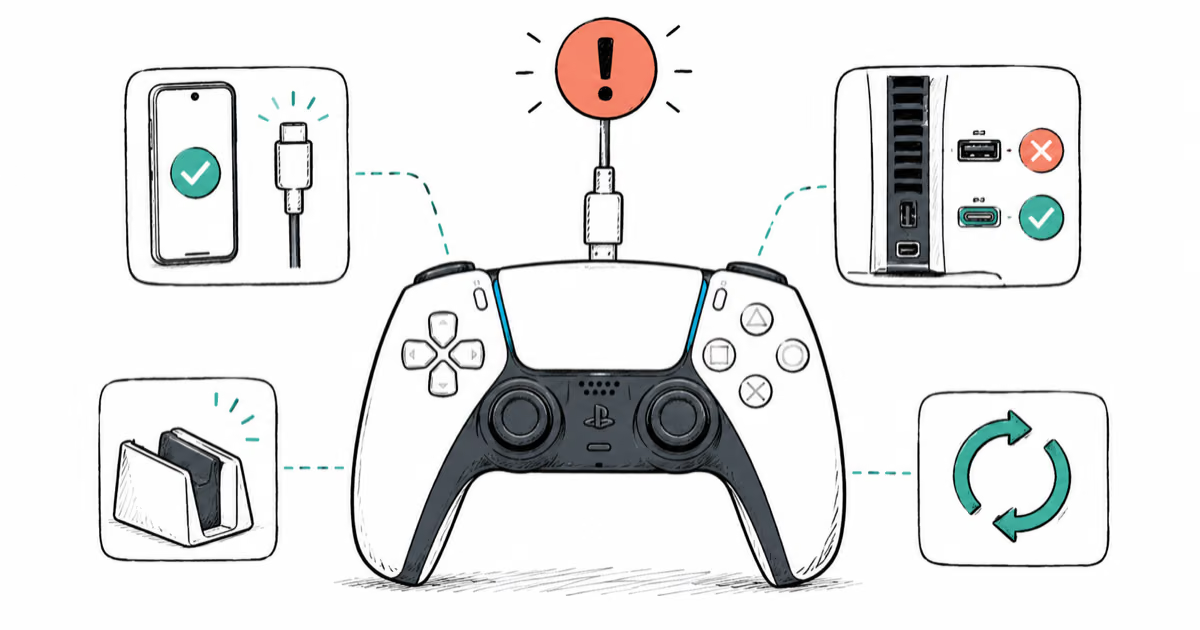
PS5 Controller Not Charging? 9 Fixes That Work (2026)
DualSense not charging? Swap the cable, use a rear port in Rest Mode, clean the USB-C port, and check power settings. 9 fixes for a dead PS5 controller.